Our participants came from varied backgrounds and ethnicities, and many of them shared the hope they felt as a result of watching this film, and their desire to continue to share or personally navigate conversations around culture.
Purdue University Extension, Marion County 4-H

In 2023, 572 Hoosiers participated in community dialogues about Arab Indianapolis: A Hidden History administered by Indiana Humanities. Non-profit organizations such as universities, religious congregations, libraries, and museums each received $250 to host the events, which were free and open to the general public. Each site was also provided with a link to the film and a robust discussion toolkit featuring historical sleuthing exercises, group dialogue prompts, and original essays on the Arab Hoosier experience. At the conclusion of the event, hosts submitted final reports that reflected on the outcomes of the event.
The final reports showed that the level of engagement was generally high. At Indy Reads, for example, “the group was so into our discussion… that we didn’t realize how much time had passed! [It was] a fun, honest exchange of ideas and information.”
Audiences for the dialogues were demographically diverse, including people from different generations, domiciles, and racial, religious, and ethnic backgrounds. The stories presented in the film were often as new to Hoosiers of Arab descent as to non-Arabs. “Several people remarked that this was the first time they felt ‘seen’ and their family’s history connected to a public film,” said the organizers at Purdue University. One non-Arab participant at the University of Indianapolis dialogue shared that “I learned a lot from watching the film, especially as it relates to the history of immigrant communities in Indianapolis and the ways in which these histories have been covered over and under appreciated.”

Several hosts sought out co-sponsors in order to bring together people with a variety of perspectives and experiences. “We were able to facilitate a lively discussion that drew a hybrid audience on our Facebook,” explained the organizers at West Lafayette Public Library. “The Islamic Society of Greater Lafayette helped the Library make it happen. Our in-person audience of dozens included families with young kids.”
At Fishers Public Library, Arab American Muslims from Al Huda Mosque and Arab American Christians from St. George Church teamed up to talk about the film. A similarly inter-faith panel at All Souls Indianapolis discussed how their faith “related to their Arab identities. This in turn led to attendees sharing and discussing their own relationship to their family histories and immigration to the USA.”

Anti-Arab discrimination and Arab American responses to it were often topics of conversations in these dialogues. At the Indiana Historical Society, for example, one speaker “described their experiences as a school child being excluded from school lunch, parties, activities, and made to sit in the corner.” At IUPUI, students, faculty, and staff discussed how anti-Arab prejudice had changed or stayed the same over time.
Though grants for the program are no longer available, the film and the discussion guide remain free for all to use.
Hosts
Feb. 15: Phoenix Theater Cultural Center, Indianapolis
Feb. 23: Ball State University Center for Peace and Conflict Studies, Muncie

Feb. 23: Indiana Center for the Study of Global Change, Bloomington
Feb. 24: Purdue Religious Studies Program, West Lafayette
March 2: Purdue Extension Marion County, Indianapolis
March 5: Indianapolis Muslim Community Association
March 8: West Lafayette Public Library
March 15: Christ Church Cathedral, Indianapolis
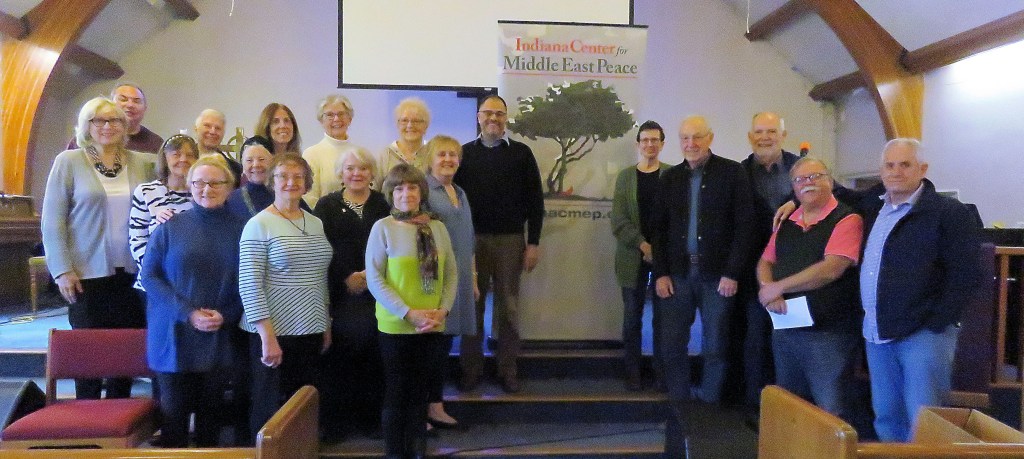
March 28: Indiana Center for Middle East Peace, Fort Wayne
April 6: IUPUI Multicultural Center
April 13: Kan Kan Cinema, Indianapolis
April 16: Indy Reads, Indianapolis
April 23: All Souls, Indianapolis
April 24: University of Indianapolis

April 25: Indiana Historical Society, Indianapolis
April 26: IU School of Dentistry, Indianapolis
April 29: Fishers Public Library
May 24: St. Paul’s, Indianapolis
May 30: St. Luke’s UMC, Indianapolis
July 26: Mid-North Shepherd’s Center, Indianapolis
Community grants for the Indiana Humanities screenings and dialogues program were made possible by the William M. and Gail M. Plater Chair of the Liberal Arts at Indiana University, Indianapolis.
 arabindianapolis.com